Blog
How Much Gold Is in a Mobile Phone? Where Gold Is Used in Electronics

How Much Gold Is in a Mobile Phone? Where Gold Is Used in Electronics
A standard smartphone holds only a few hundredths of a gram of gold. The most widely cited estimate, from the U.S. Geological Survey, works out to about 0.034 g per handset, spread across circuit-board plating, connectors and chips. That is useful metal, but it is a trace amount. It is also hidden inside the phone, where it does a technical job, not a decorative one.
This guide explains where that gold sits and why engineers use it. It then puts the figure next to the gold you can actually see on a customized phone: a plated panel measured in microns, and a solid 18K gold charm measured in grams.
Where the 0.034 g figure comes from
The estimate traces back to a 2006 USGS fact sheet, Recycled Cell Phones: A Treasure Trove of Valuable Metals. Using recycler data, it put the gold content of one metric ton of obsolete phones (batteries excluded) at 300 grams. With an average handset weight of 113 grams, that comes to 0.034 g of gold per phone.
The U.S. Environmental Protection Agency repeats the same USGS work in a different form: for every million cell phones recycled, about 75 pounds of gold can be recovered. Seventy-five pounds is roughly 34 kilograms, which again comes to about 34 milligrams per phone.
Two caveats matter. The data describe phones from the mid-2000s, and today’s smartphones are heavier and built differently. And manufacturers do not publish a gold weight per model. Apple’s 2025 Environmental Progress Report, for example, reports how much of its gold is recycled, but not how many milligrams go into an iPhone. Treat 0.034 g as an order of magnitude, not a specification.
Where gold is used inside a phone
Apple’s report is unusually specific about where the metal goes. It says gold is used “in the circuit boards, connectors, and chips” of its products, and it names individual parts:
Circuit boards
Gold plating on rigid and flexible printed circuit boards. Apple says Mac mini was its first product to use 100% recycled gold in all Apple-designed boards.
Connectors
Plating on contact surfaces. Apple says the USB-C connector in the iPhone 15 and iPhone 16 lineups uses 100% recycled gold.
Camera wire
Apple reports 100% recycled gold in the wire of all cameras in the iPhone 16 lineup.
Chips
Apple lists chips among the components that use gold, without giving quantities.
None of this is visible, and none of it is the yellow metal a buyer pictures. These are thin functional layers and fine wires, which is why the total weight stays so low.
Why electronics use gold at all
The Royal Society of Chemistry sums it up: gold is ideal for protecting electrical copper components because it conducts electricity well and does not corrode. A contact that tarnished would gradually stop passing signal reliably. A thin gold layer stays clean.
Apple gives the same reasons: corrosion resistance, high electrical conductivity, and durability when the gold is alloyed with nickel or cobalt. That last point matters. Connector gold is often a hardened alloy chosen to survive repeated plugging. It is not the soft, pure 24K gold used for decorative finishes.
How much gold electronics use worldwide
A trace per device adds up across billions of devices. The World Gold Council’s Gold Demand Trends Q2 2025 lists electronics demand of 69.1, 68.8, 67.0 and 65.8 tonnes for the four quarters from Q3 2024 to Q2 2025. That totals roughly 271 tonnes in twelve months.
Much of it is never recovered. The UN’s Global E-waste Monitor 2024 reports a record 62 million tonnes of e-waste in 2022, of which only 22.3% was documented as properly collected and recycled. It estimates that US$62 billion of recoverable natural resources went unaccounted for. That is why Apple and others are building recycled-gold supply chains: Apple says recycled gold rose from 1% of its gold in 2021 to about 40% in 2024.
Gold on the outside: what a customized phone actually carries
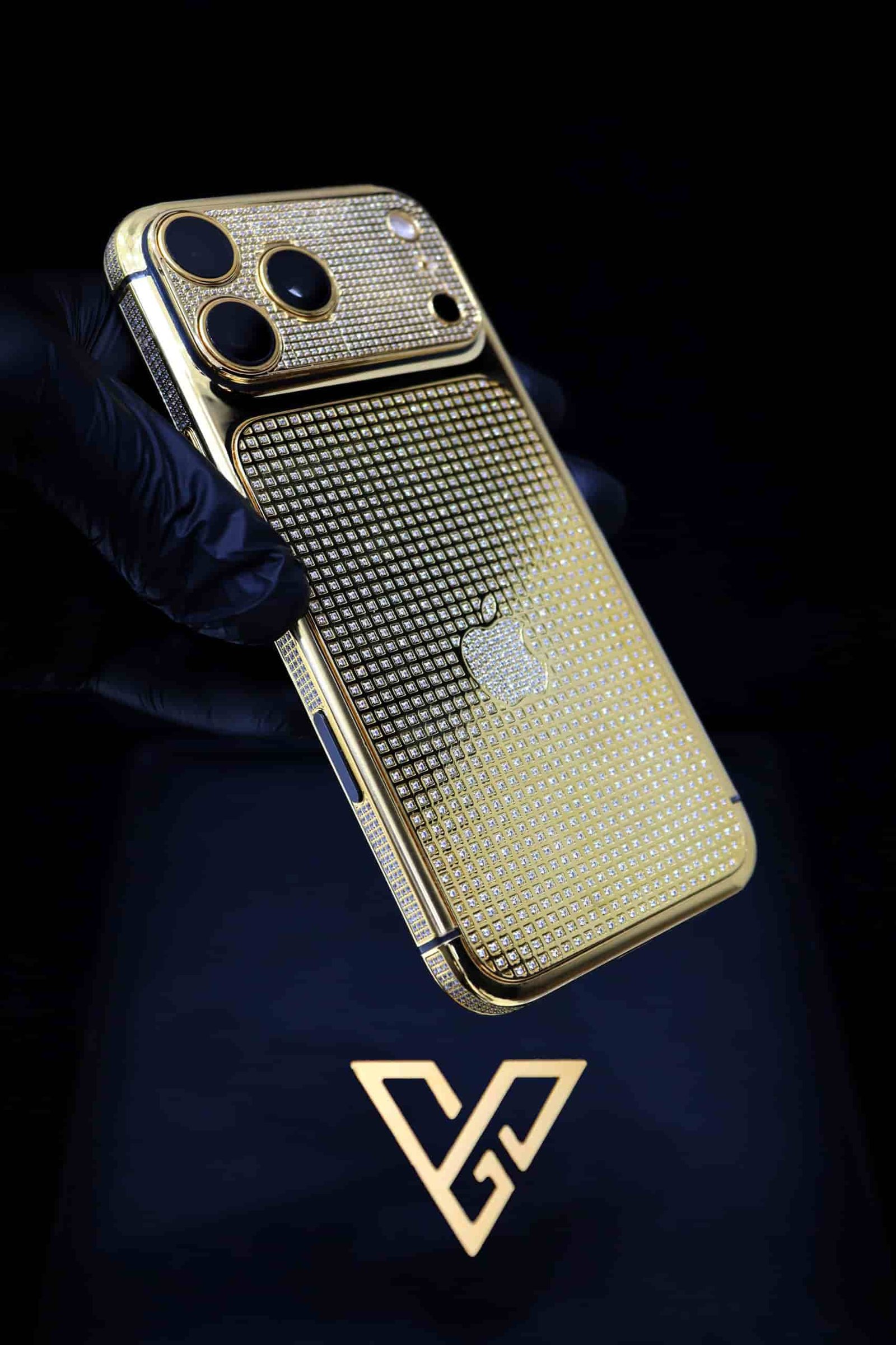
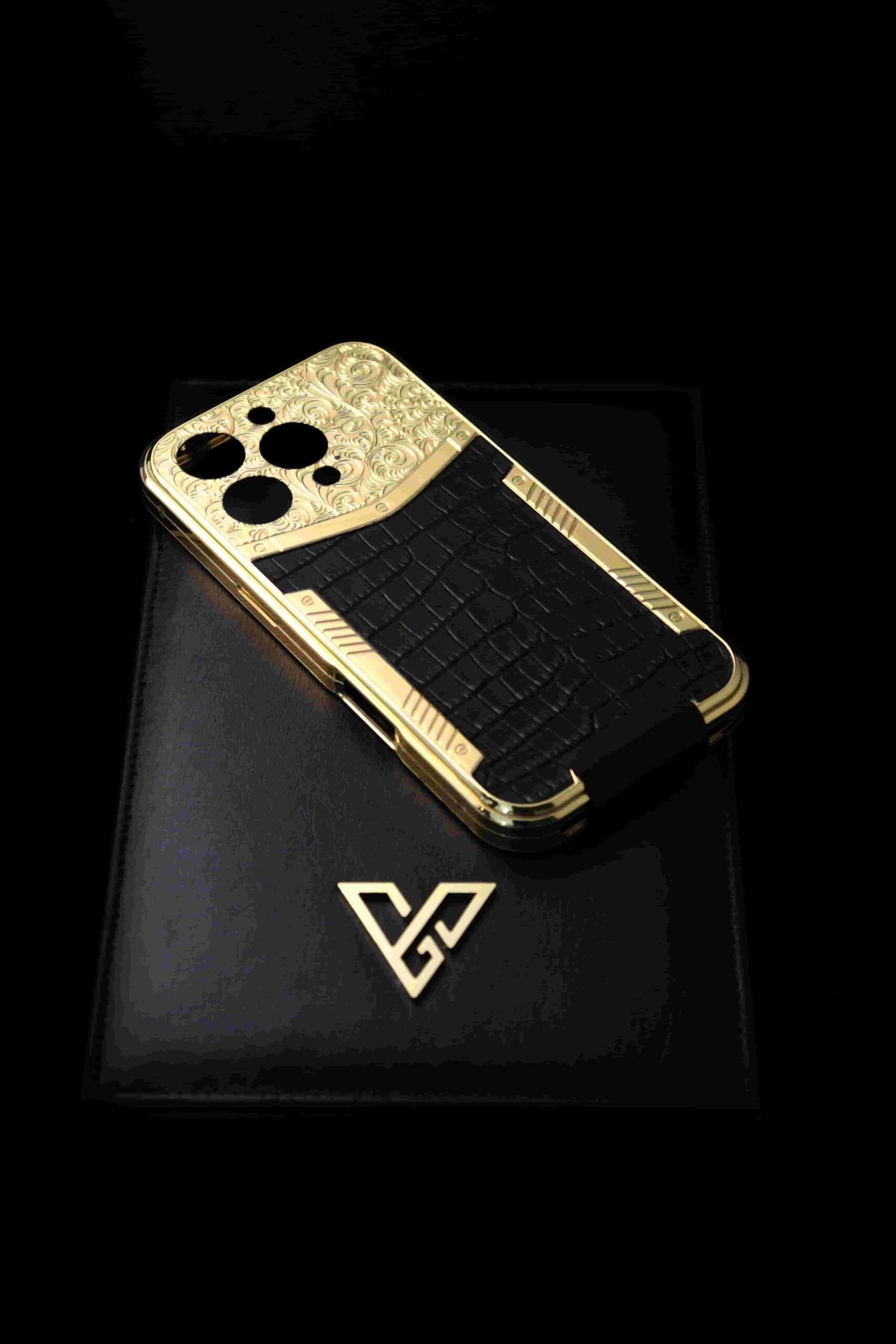
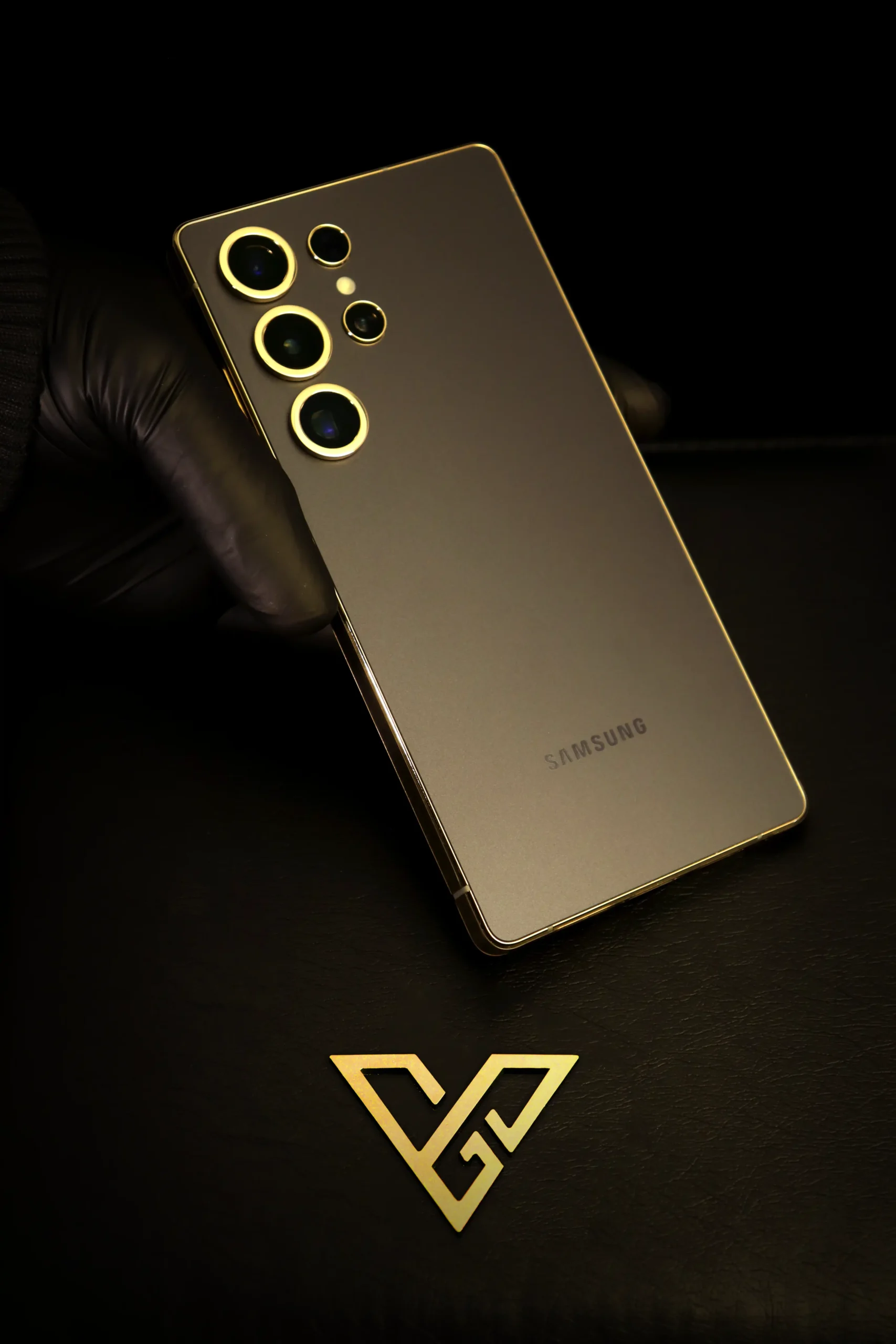
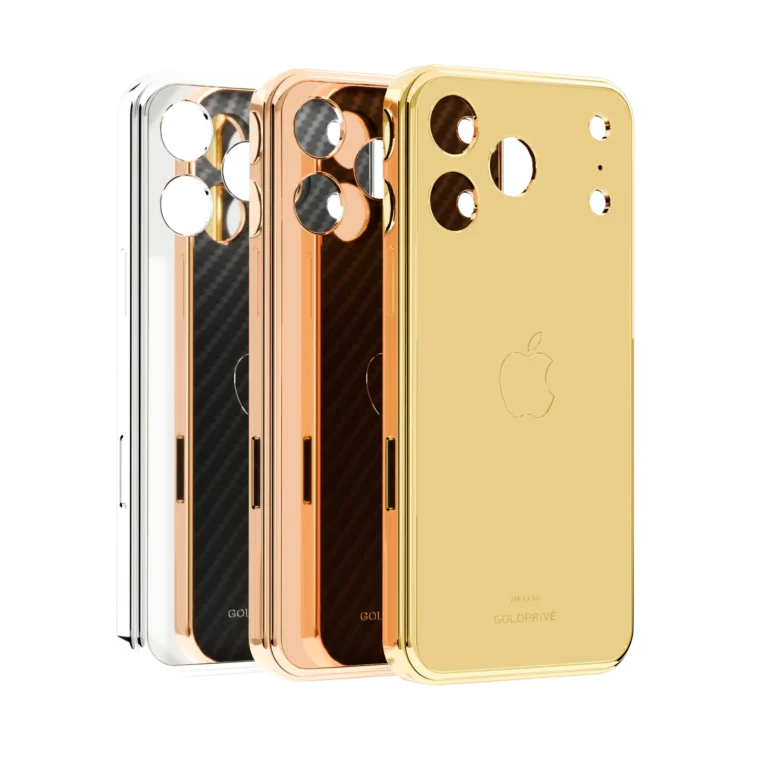
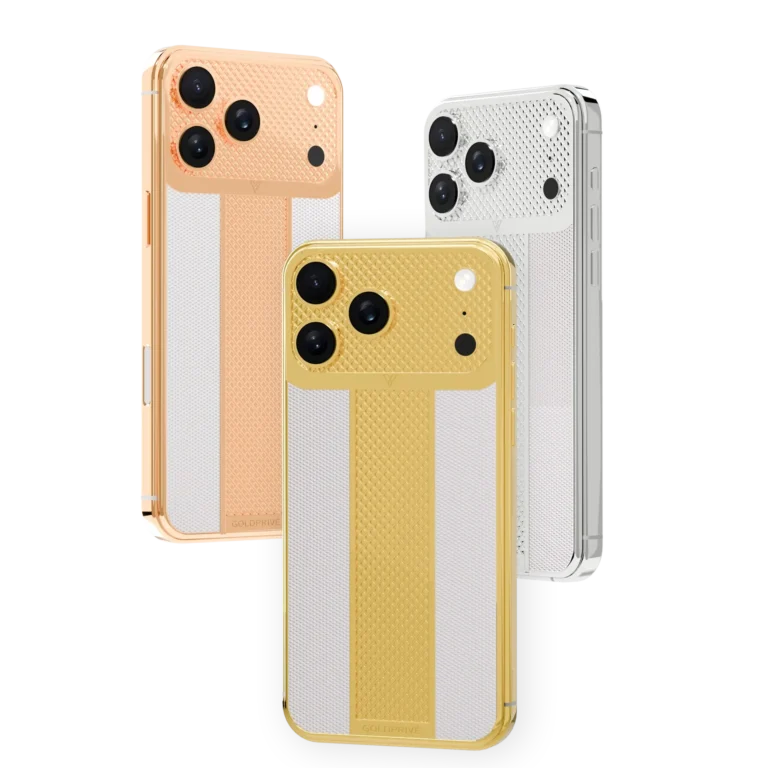
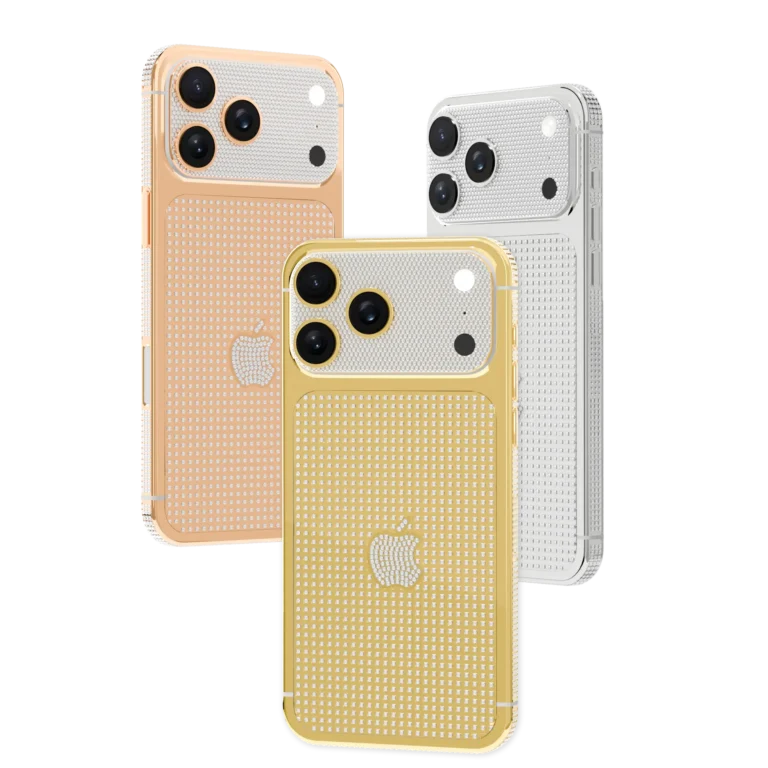
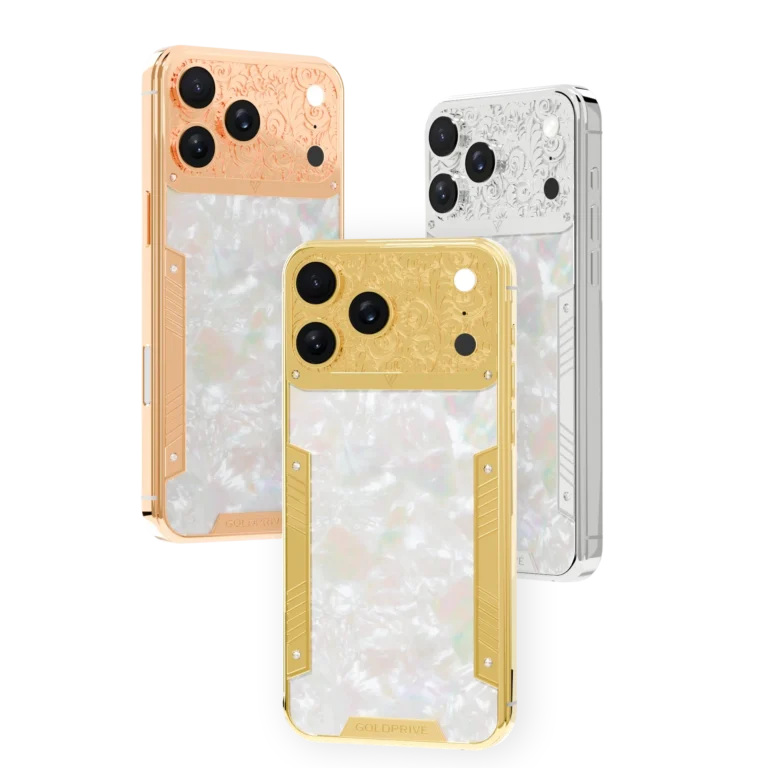
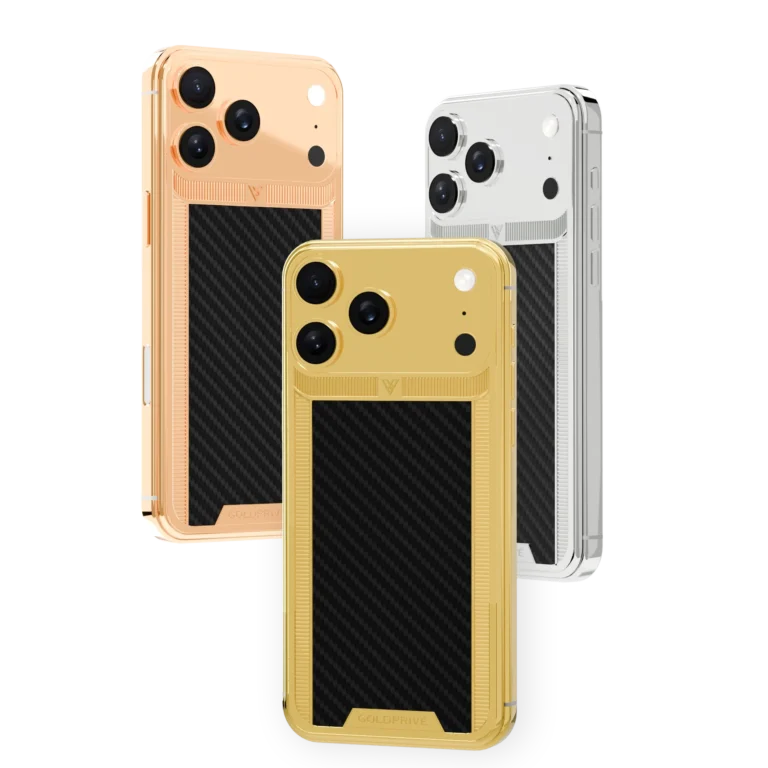
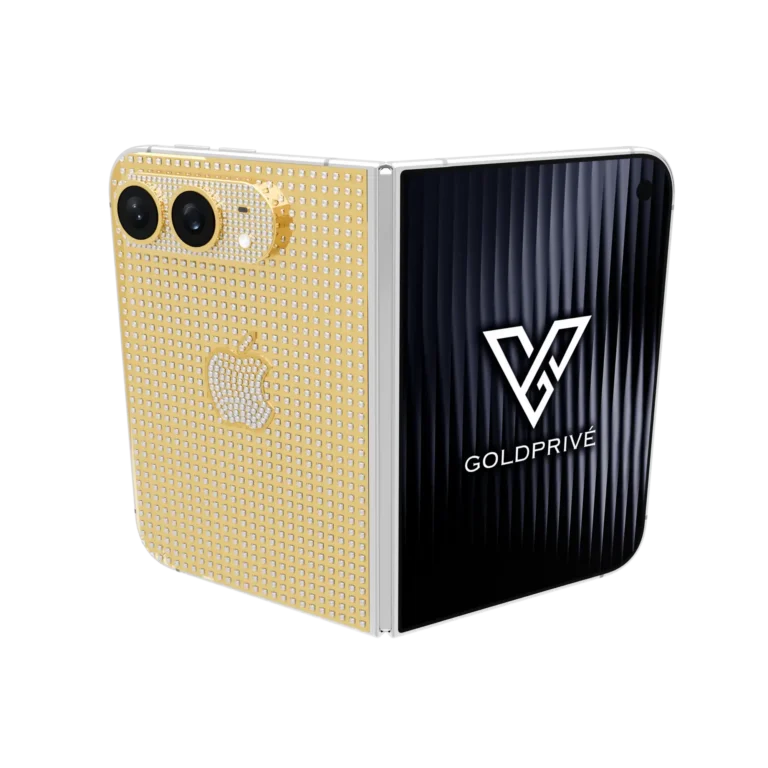
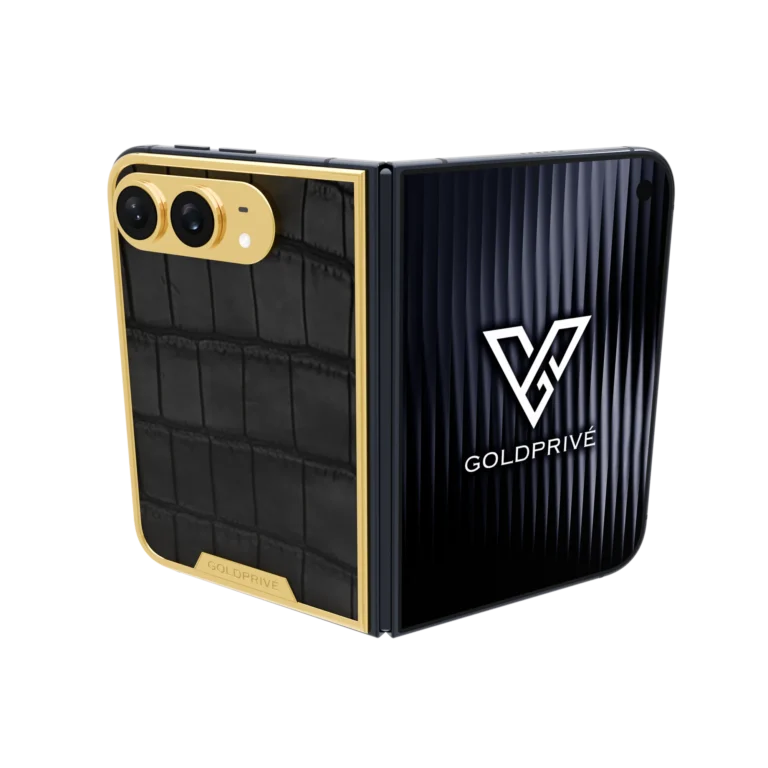
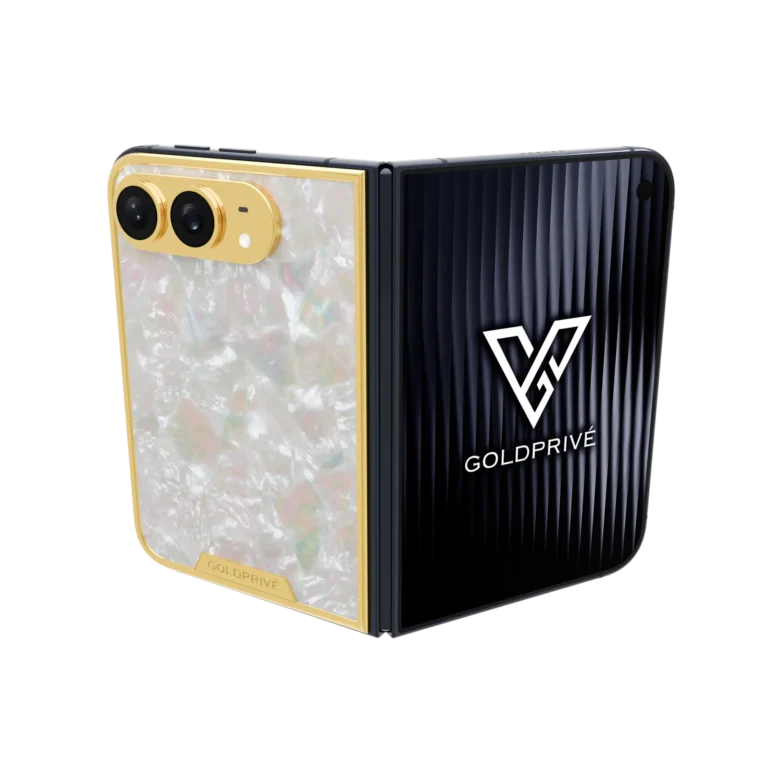
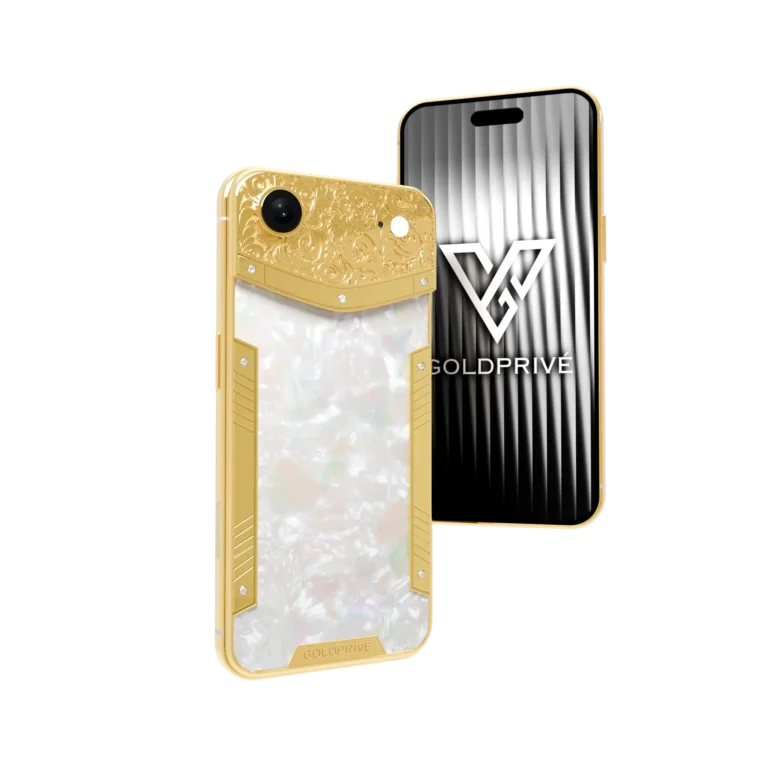
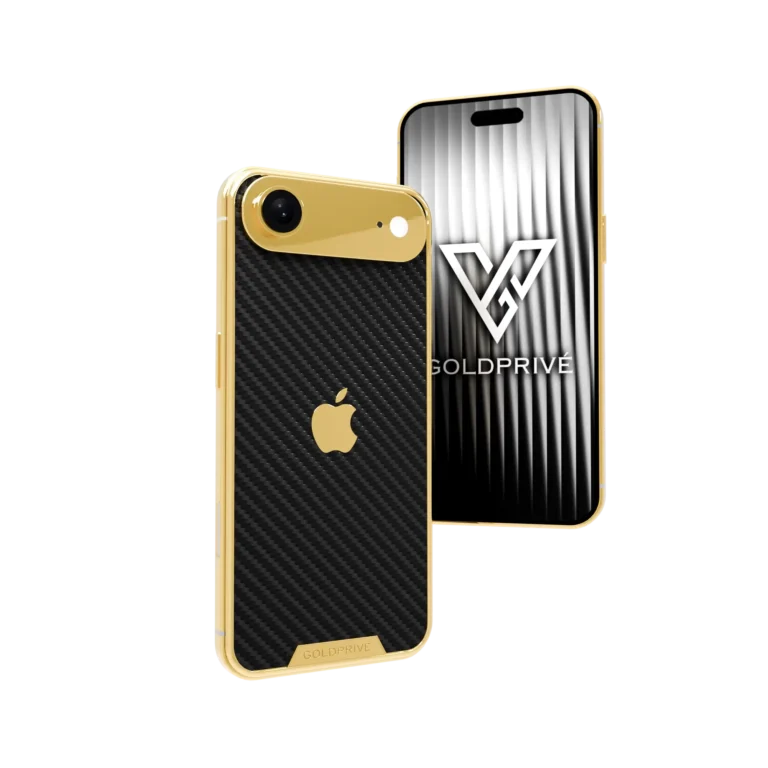
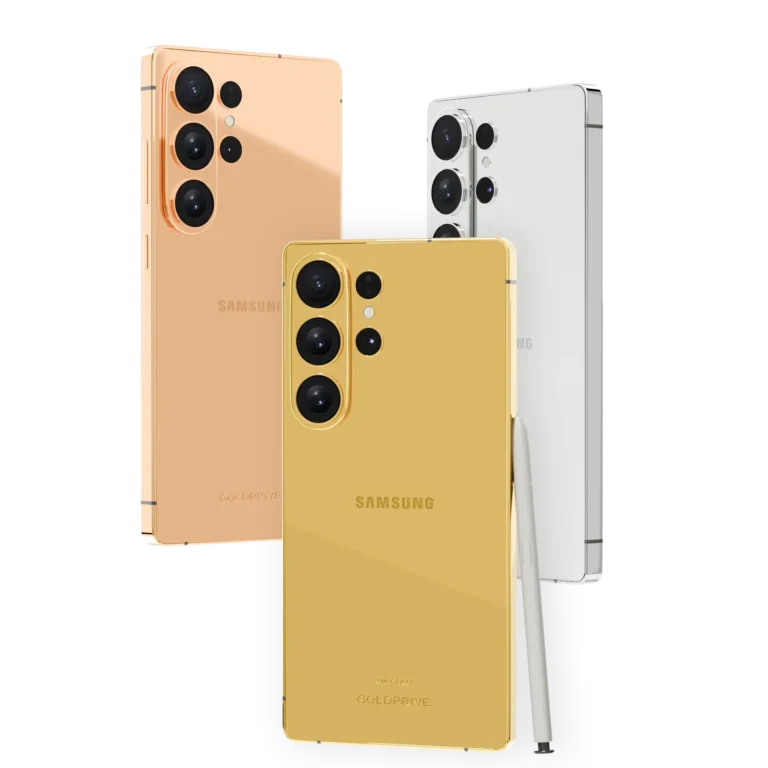
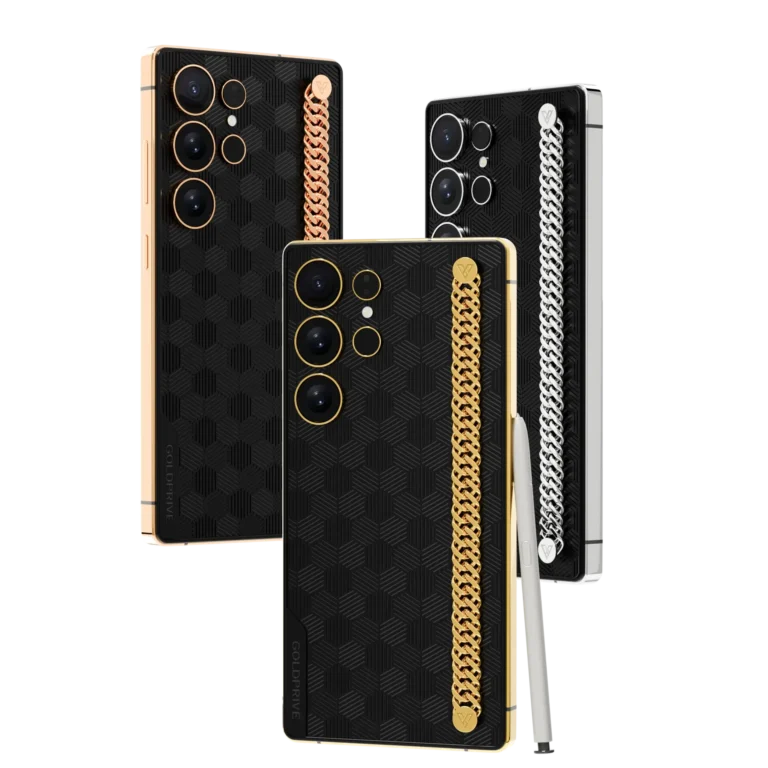
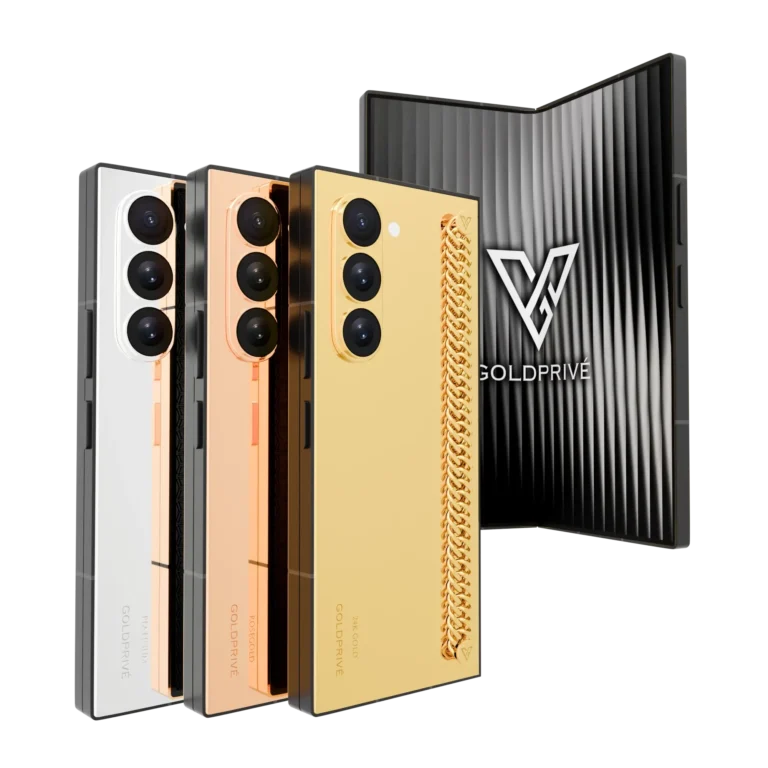
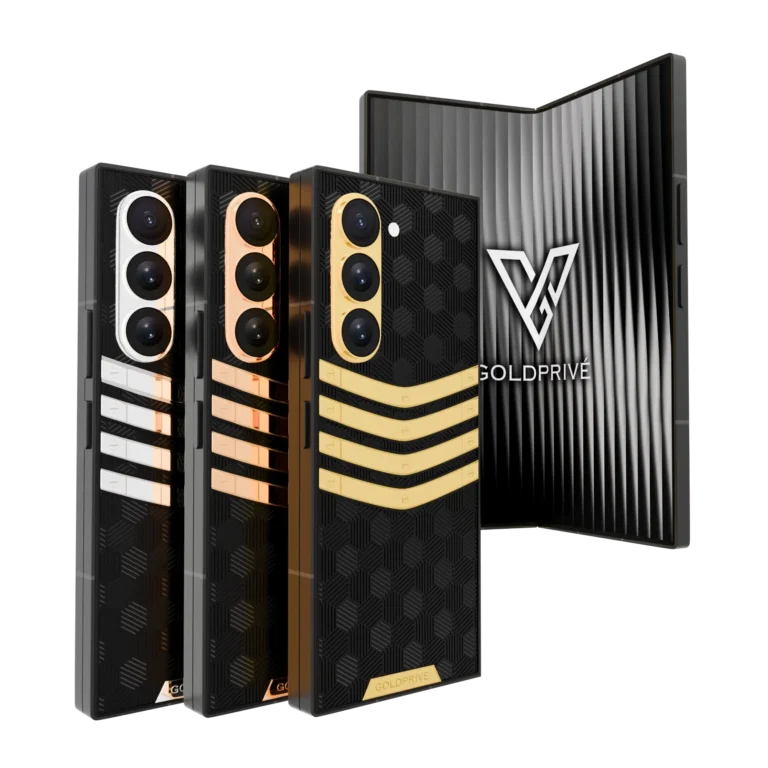
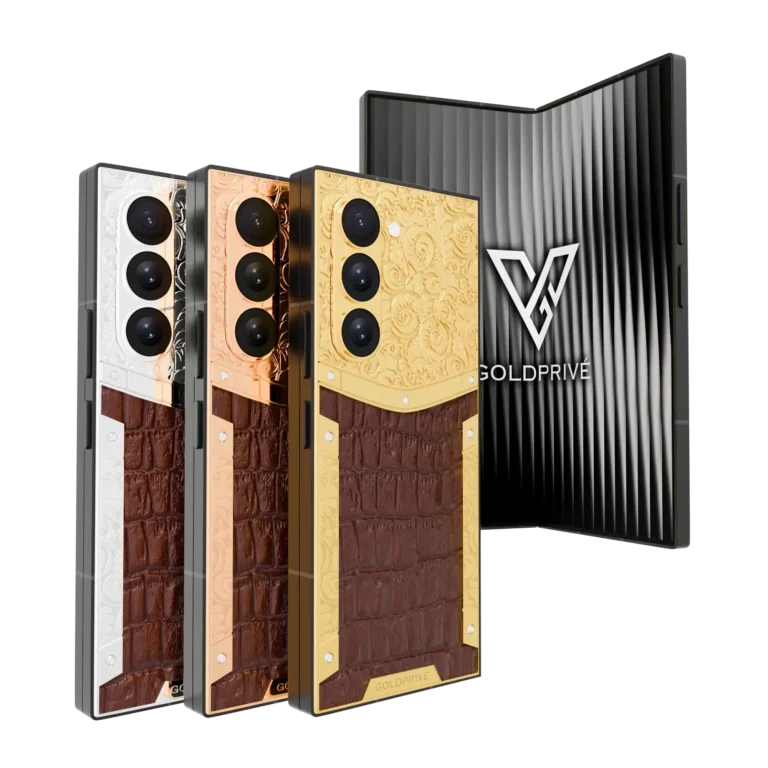
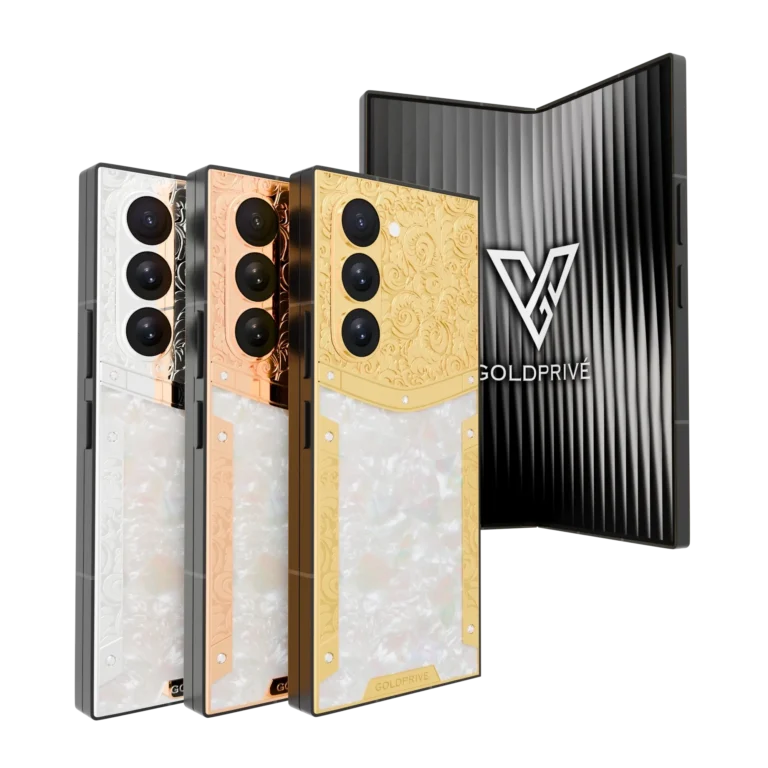
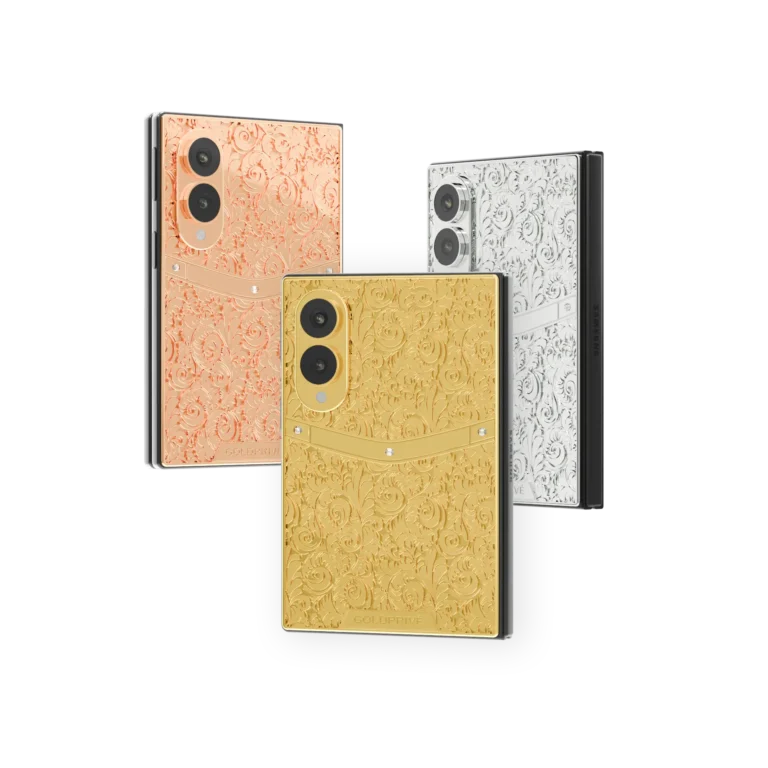
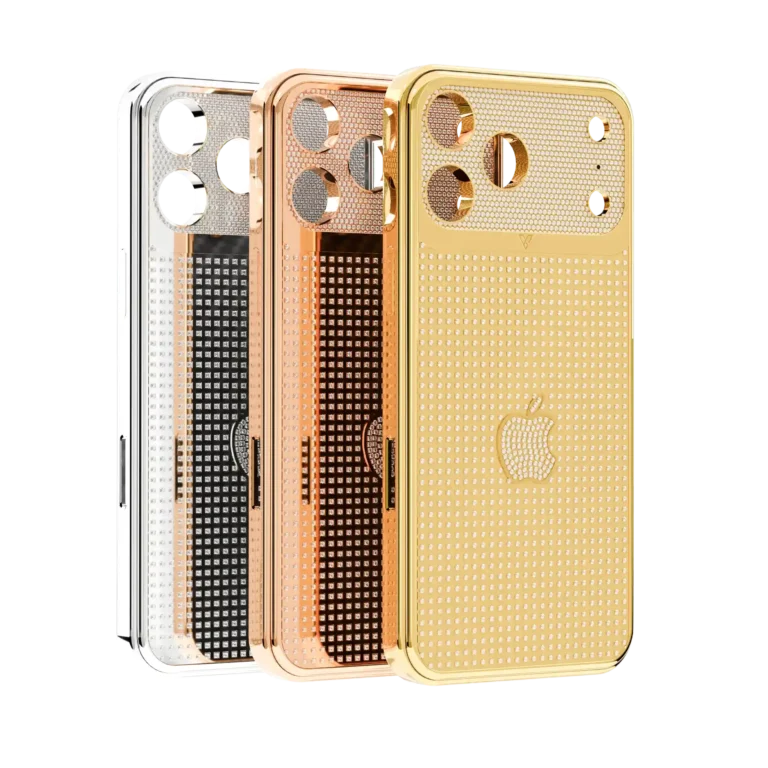
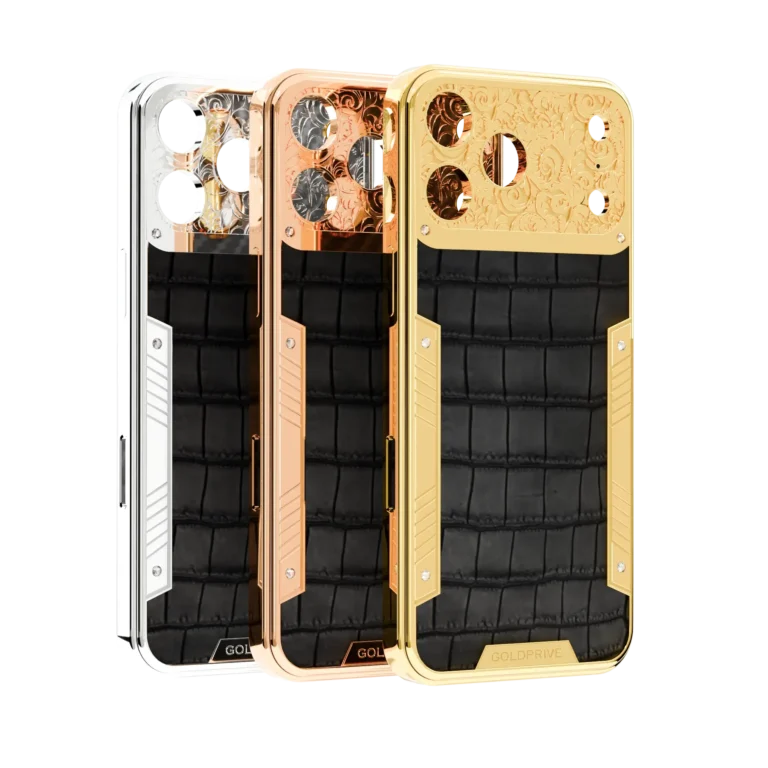
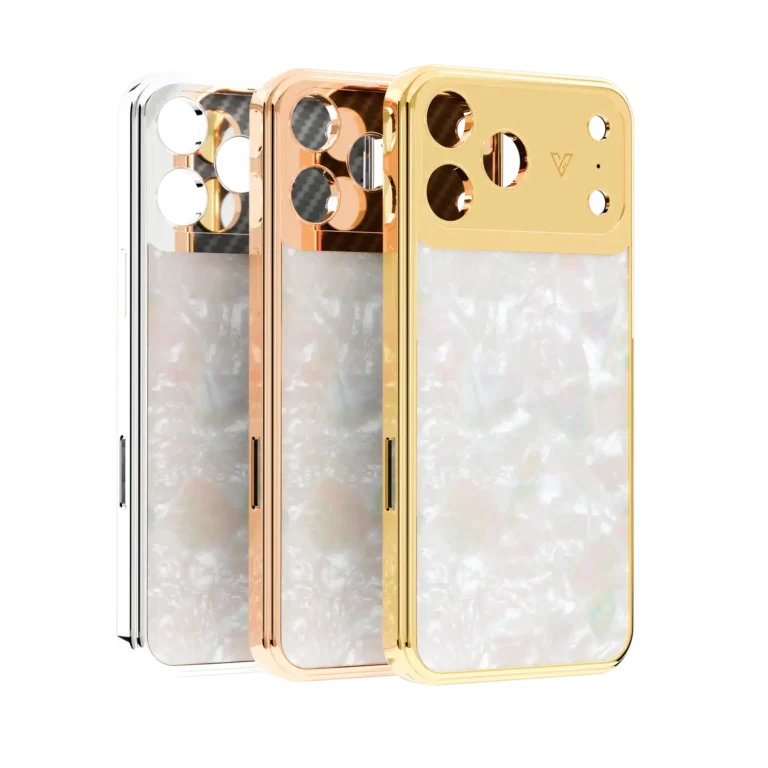
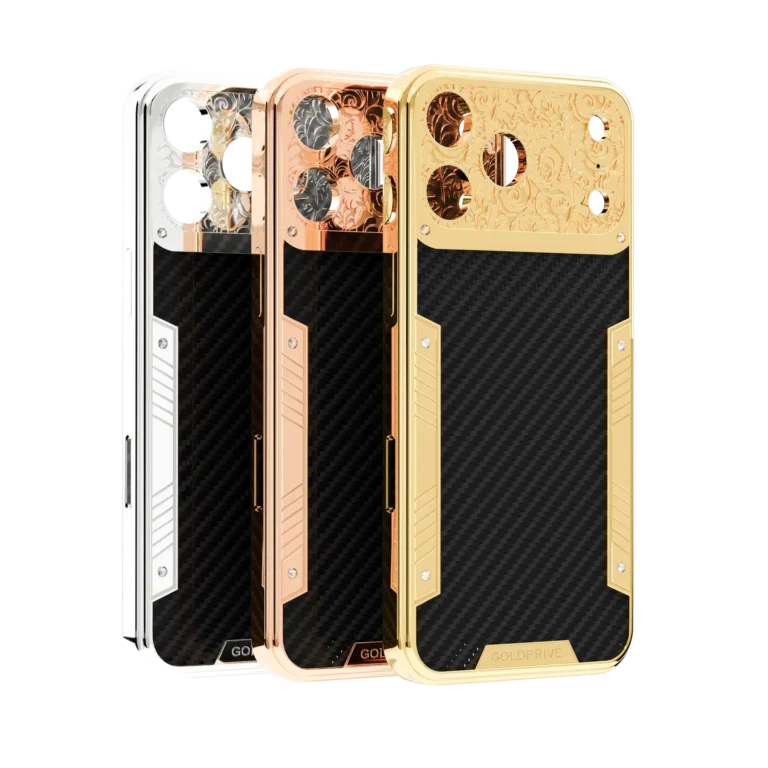
Inside gold is functional. Outside gold is the finish you choose, and it is measured differently. At GoldPrivé, plating is applied 5 to 7 microns thick in 24K gold, rose gold or platinum, on a genuine, factory-new device. You can estimate the gold in a plated area from three numbers: area, thickness and density. The Royal Society of Chemistry gives gold’s density as 19.3 g/cm³.
Worked example: 24K plating by area
One micron is 0.0001 cm. So one square centimetre plated one micron thick holds 0.0001 cm³ of gold, which weighs 0.0001 × 19.3 = 0.00193 g, or about 1.93 mg.
At 5 microns that is about 9.7 mg per cm², and at 7 microns about 13.5 mg per cm². A 100 cm² plated surface therefore carries roughly 0.97 to 1.35 g of 24K gold. That is around 28 to 40 times the USGS estimate for a whole phone’s internal gold.
| Plated surface | At 5 microns | At 7 microns | vs ~0.034 g internal gold |
|---|---|---|---|
| 25 cm² (accents, lens rings, a strip) | ~0.24 g | ~0.34 g | ~7 to 10 times |
| 50 cm² | ~0.48 g | ~0.68 g | ~14 to 20 times |
| 100 cm² | ~0.97 g | ~1.35 g | ~28 to 40 times |
| 150 cm² | ~1.45 g | ~2.03 g | ~43 to 60 times |
Area × thickness × 19.3 g/cm³, for a 24K finish only. The plated area varies by design, so the table works per area rather than per model. Rose gold is an alloy and carries less gold than the same thickness of 24K. Platinum plating contains no gold at all.
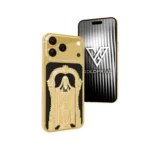
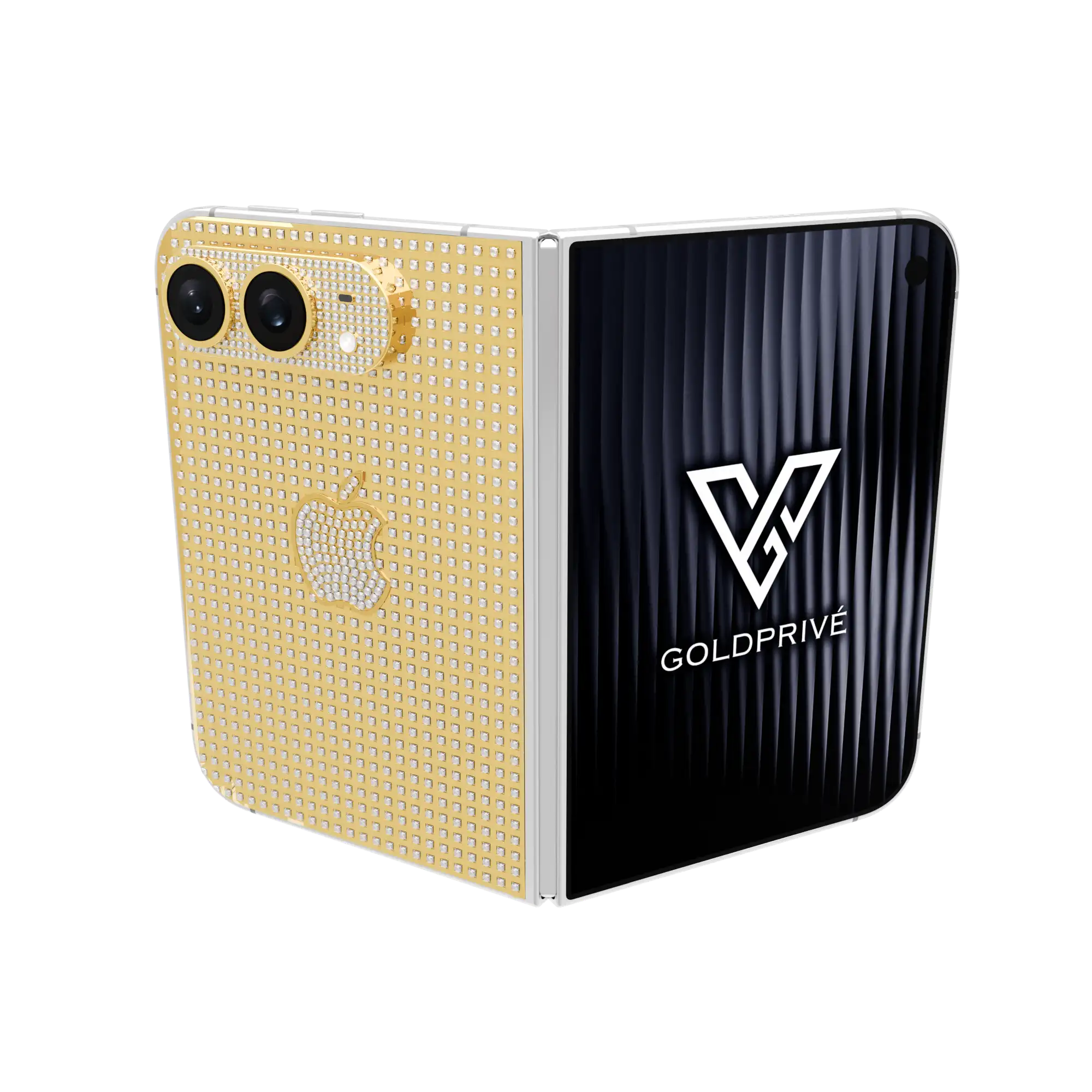
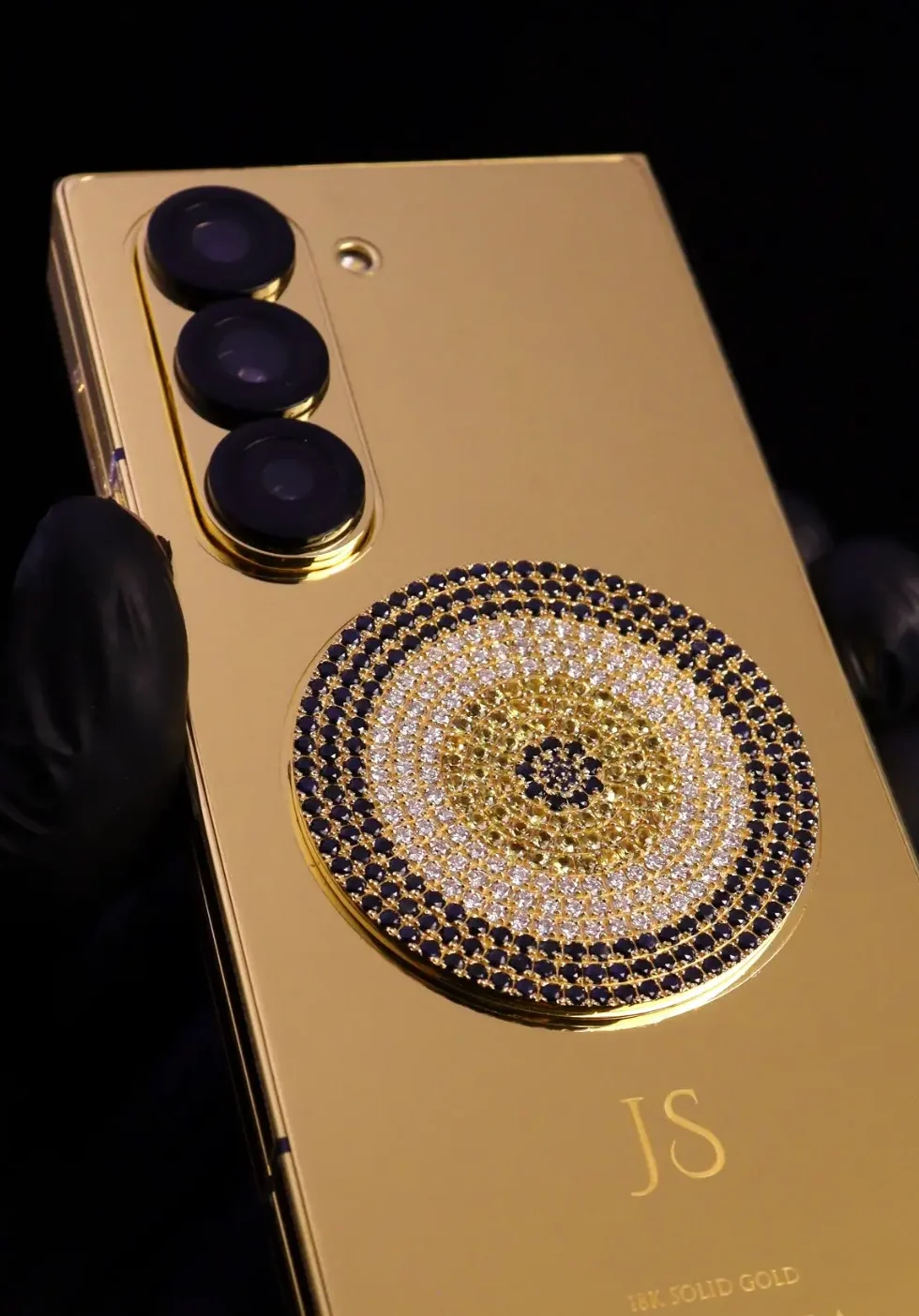
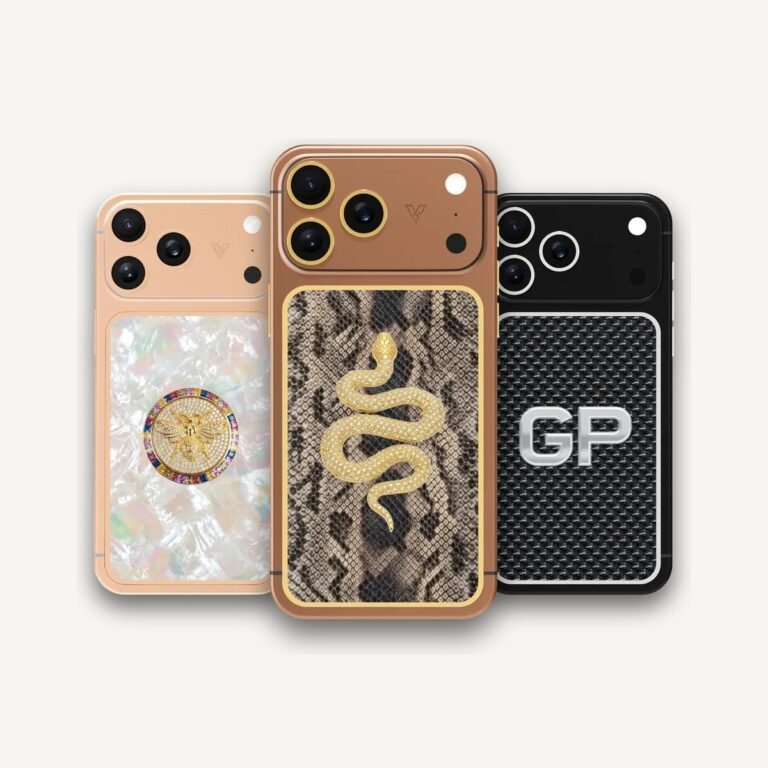
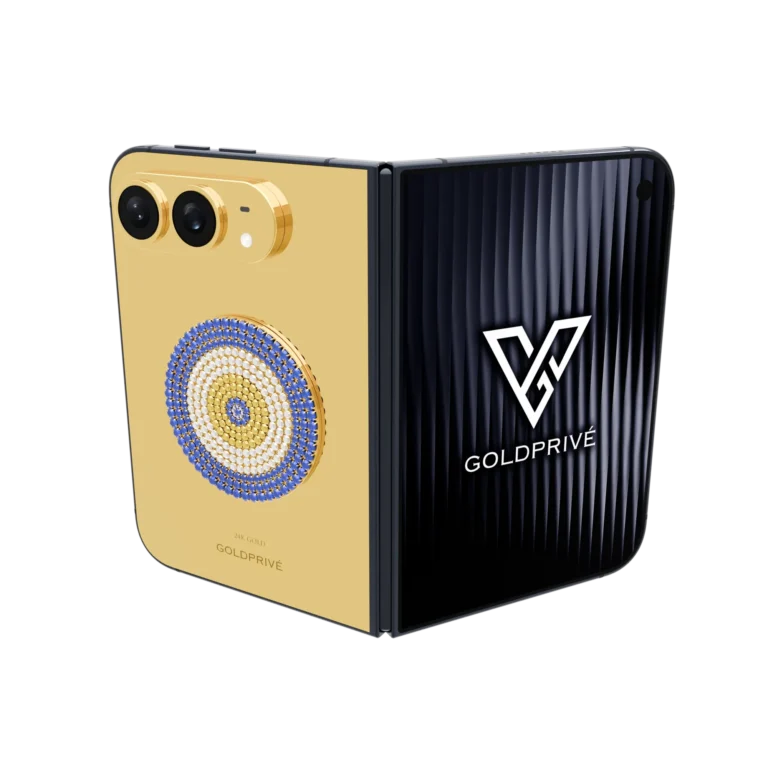
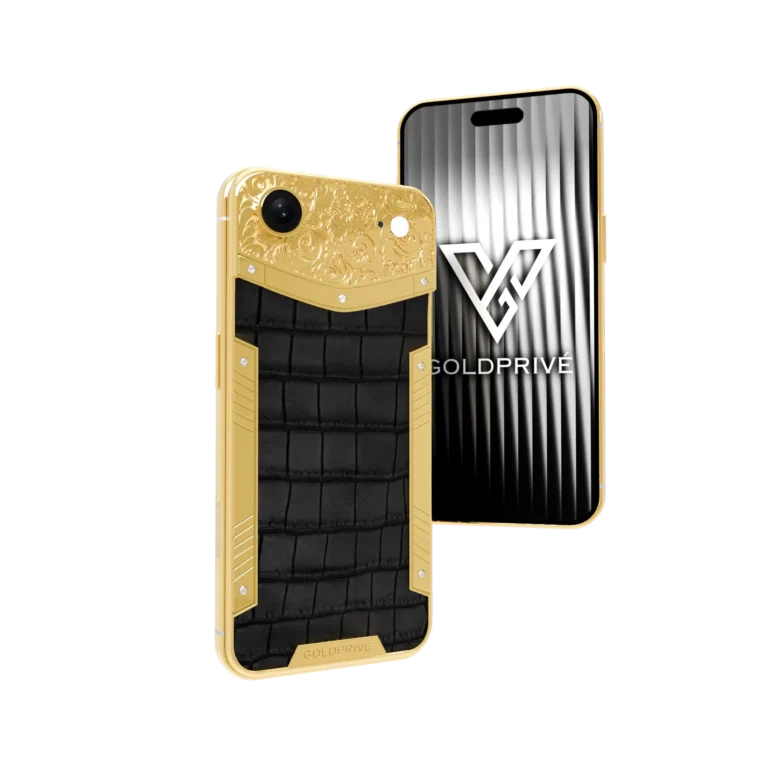
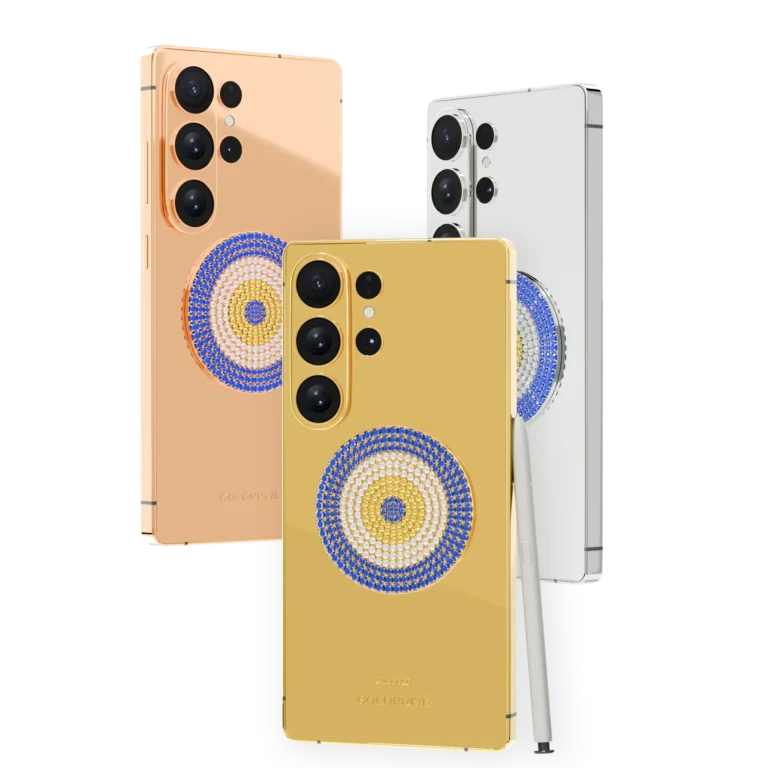
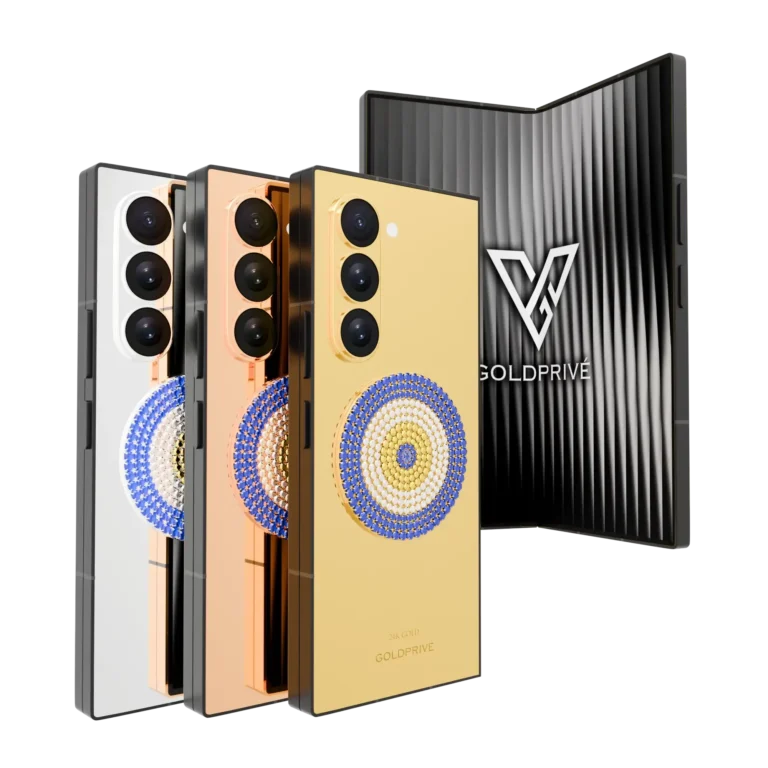
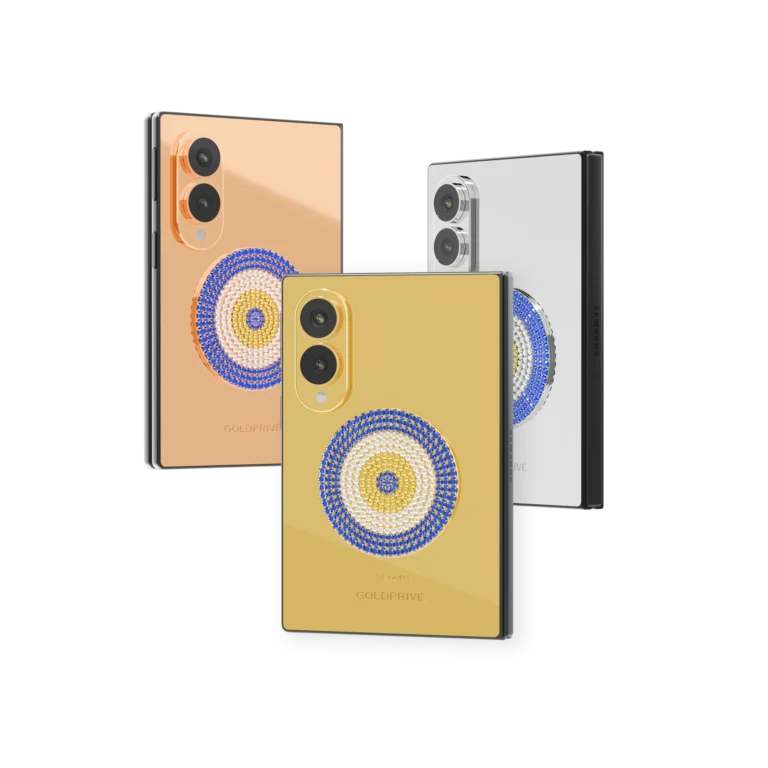
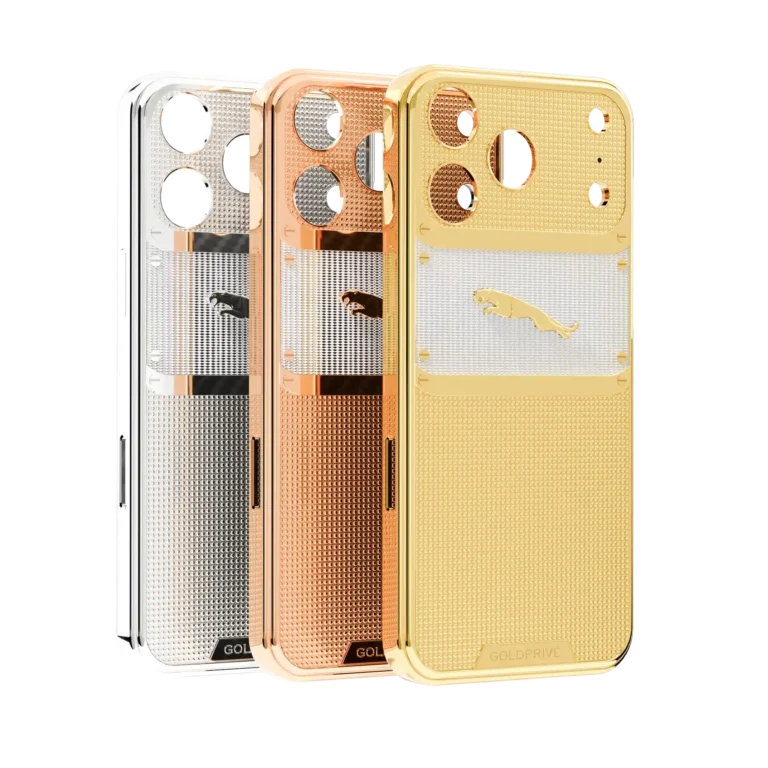
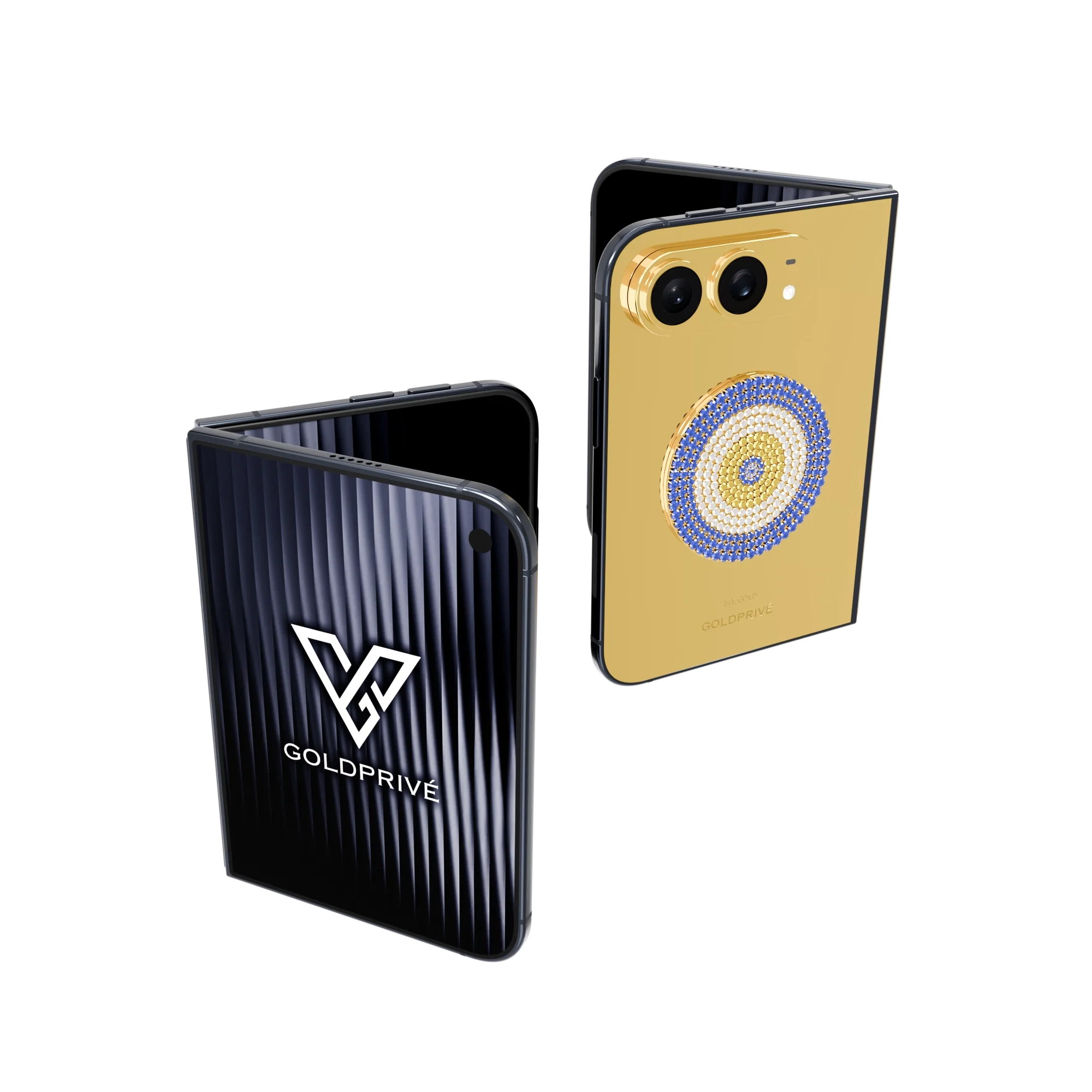
The gap widens further on designs with solid gold. GoldPrivé’s product listings give two weights. The LuxEvil Charm Gold iPhone Duo carries a nazar charm cast from 30 to 35 grams of 18K solid gold. The Meandros Blessing Eye Gold iPhone Duo medallion is roughly 20 grams of 18K solid gold.
18K means 18 parts gold in 24, or 75%. That puts the pure gold at about 22.5 to 26 g in the LuxEvil charm and about 15 g in the Meandros medallion. Even the smaller one holds over 400 times the internal gold of a typical phone.
| Where the gold is | Form | Approx. pure gold | Purpose |
|---|---|---|---|
| Inside a standard phone | Plating on boards and connectors, fine wire, chips | ~0.034 g | Conductivity, corrosion resistance |
| 24K plated surface, per 100 cm² | 5 to 7 micron layer | ~0.97 to 1.35 g | Finish and colour |
| Meandros medallion (iPhone Duo) | ~20 g of 18K solid gold | ~15 g | Ornament, solid metal |
| LuxEvil charm (iPhone Duo) | 30 to 35 g of 18K solid gold | ~22.5 to 26 g | Ornament, solid metal |
- USGS (2006): about 300 g of gold per metric ton of obsolete phones, or about 0.034 g per 113 g handset, batteries excluded.
- EPA: about 75 lb of gold recoverable per million recycled cell phones, citing USGS.
- Apple (2025 report): gold is used in circuit boards, connectors and chips. About 40% of the gold in its products was recycled in 2024. As of April 2025, 99% of its connectors use 100% recycled gold plating.
- World Gold Council: electronics demand was 65.8 t in Q2 2025.
- Gold density: 19.3 g/cm³ (Royal Society of Chemistry).
- GoldPrivé product listings: plating is 5 to 7 microns. The LuxEvil charm is 30 to 35 g of 18K solid gold, and the Meandros medallion is roughly 20 g.
What the gold on the outside changes
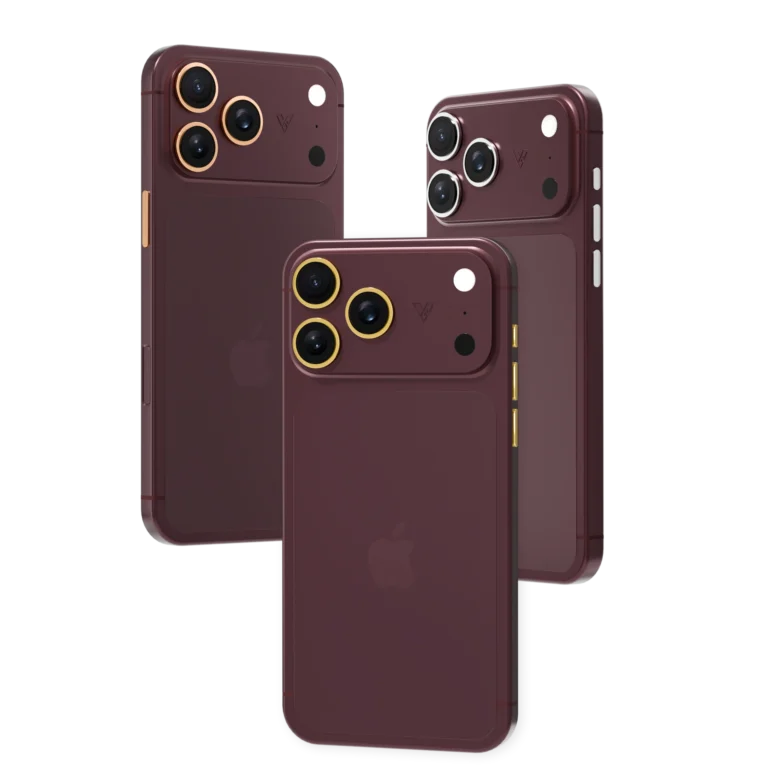
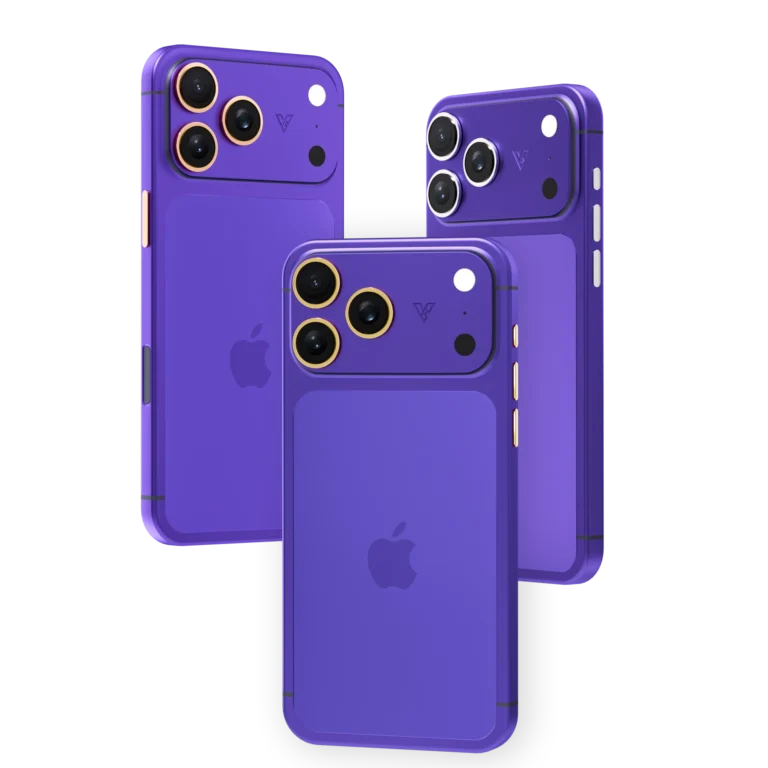
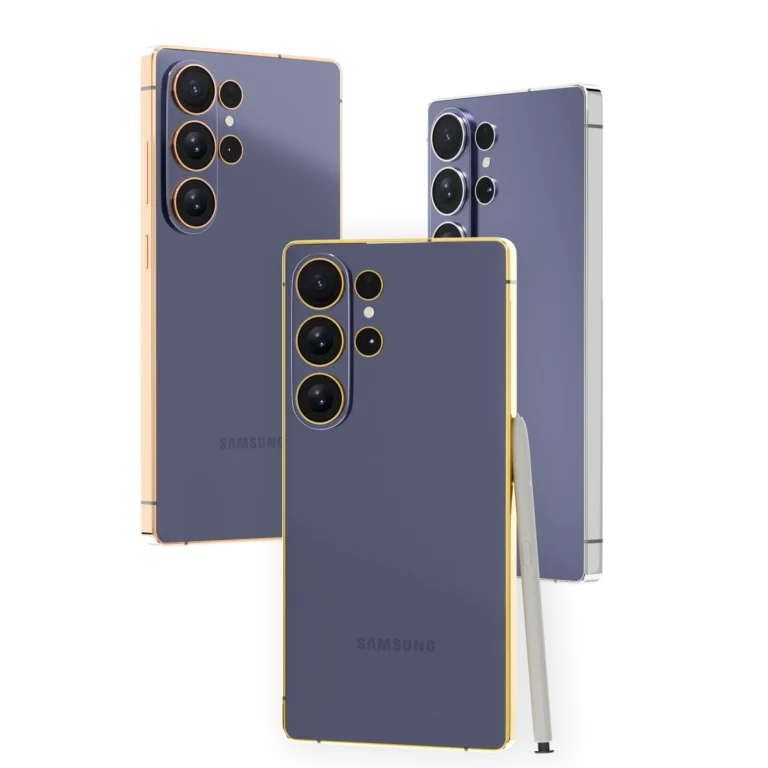
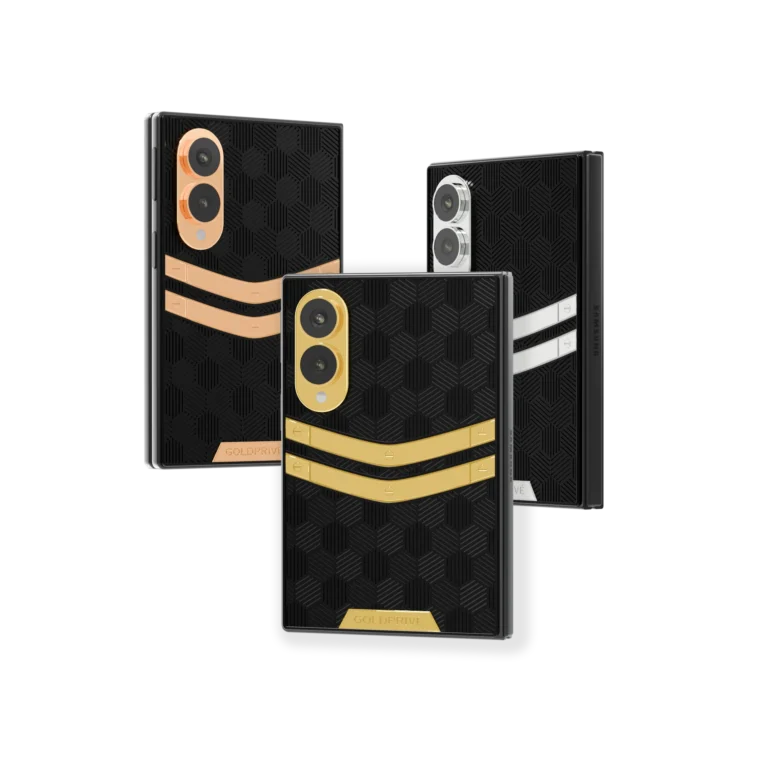
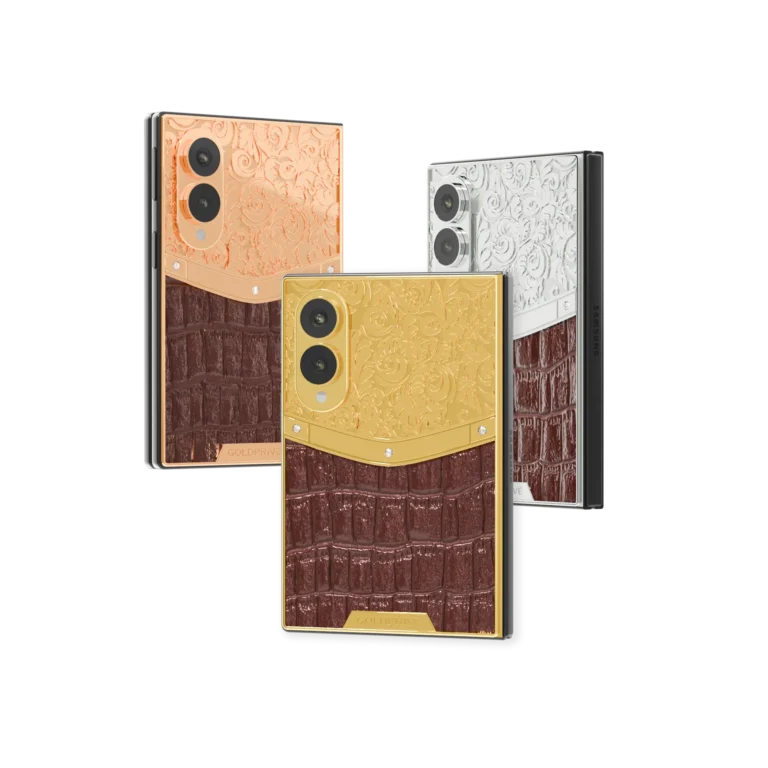
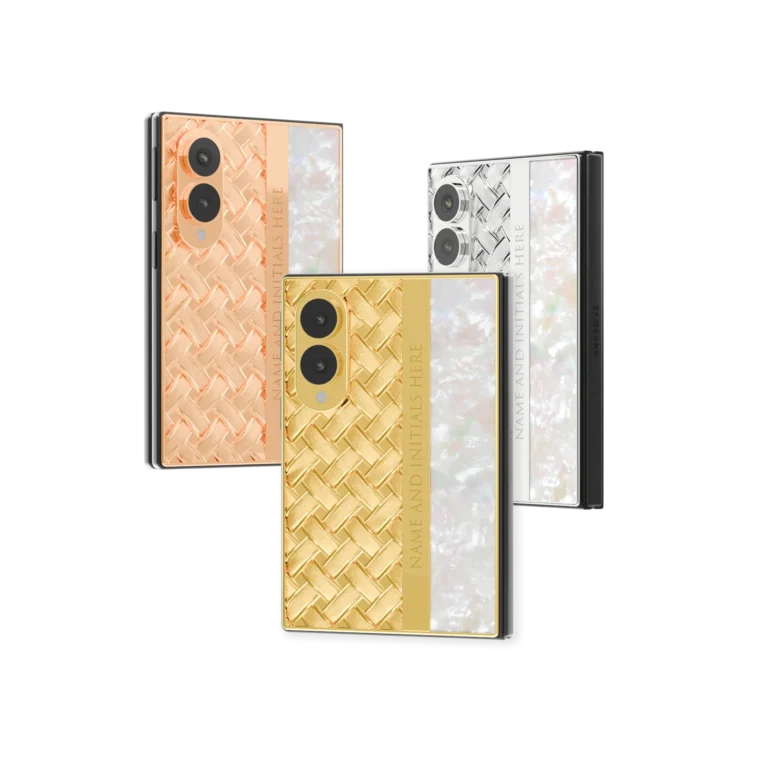
A metal back has practical effects that internal gold never does. On GoldPrivé Galaxy S26 Ultra and Z Fold8 Ultra designs with a plated back, the product listings say the metal blocks the wireless charging field and the NFC signal used for tap-to-pay, so those phones charge over USB-C. Some designs keep the original back. The Cobalt Violet Galaxy S26 Ultra, for example, plates only the frame and lens rings and keeps Samsung’s glass, so wireless charging and Samsung Wallet still work. On the iPhone Duo, MagSafe support varies by design. Check each listing before you buy.
On foldables, the frame and hinge are never plated. Any customized phone loses its water resistance, and the manufacturer may treat it as modified for warranty purposes. GoldPrivé’s own warranty covers the customization for two years and the device for one year, excluding liquid damage.
For more on how thickness affects wear, see gold plating explained and how long gold plating lasts. If you want to check whether a piece is solid or plated, our real vs fake gold guide covers hallmarks and safe tests.
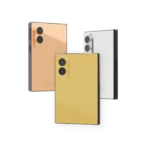
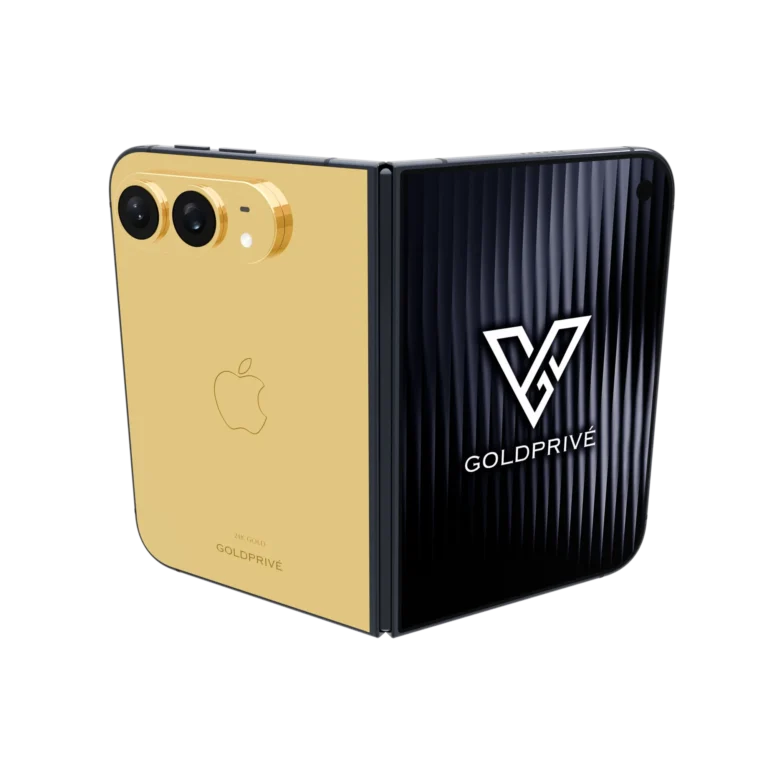
Gold iPhone Duo
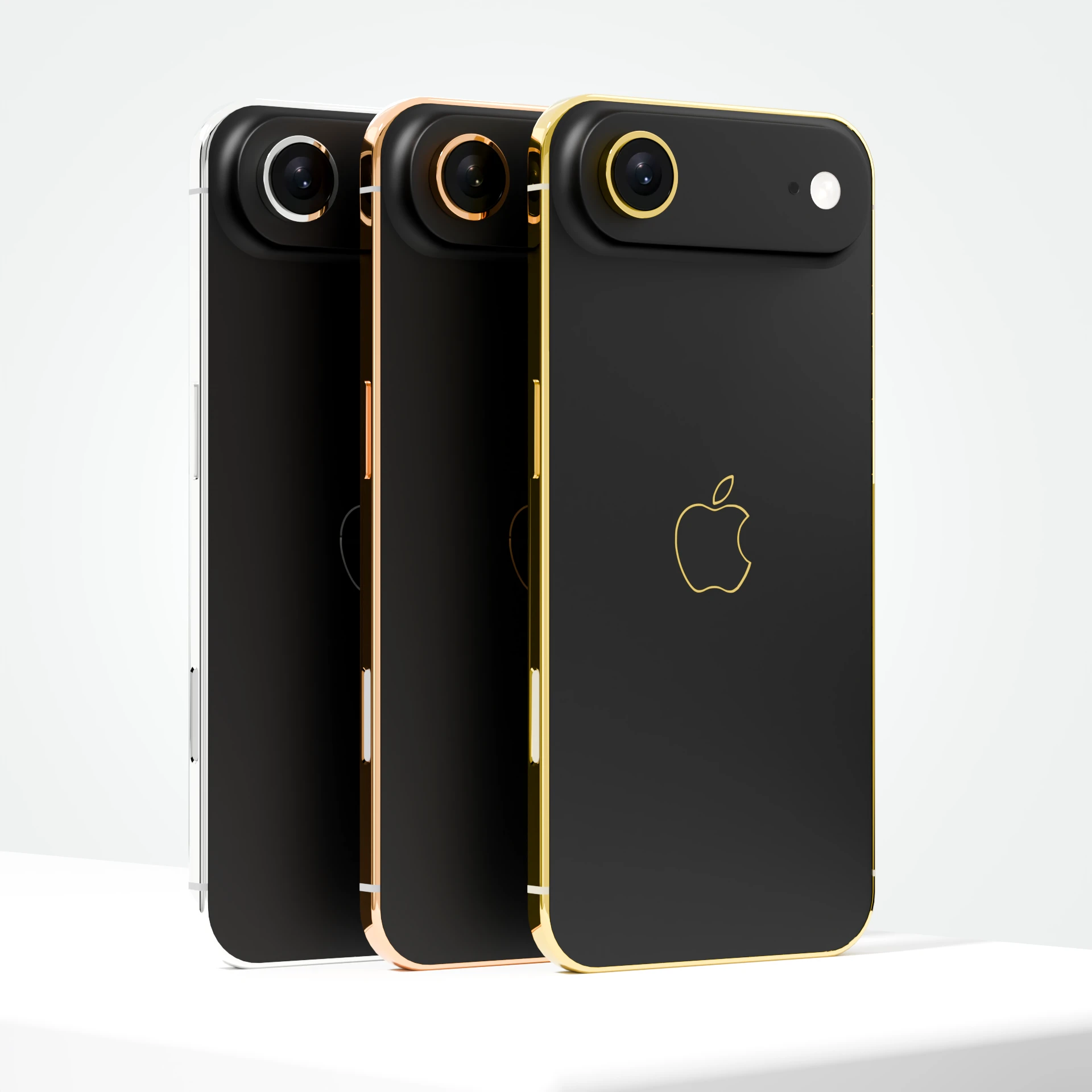
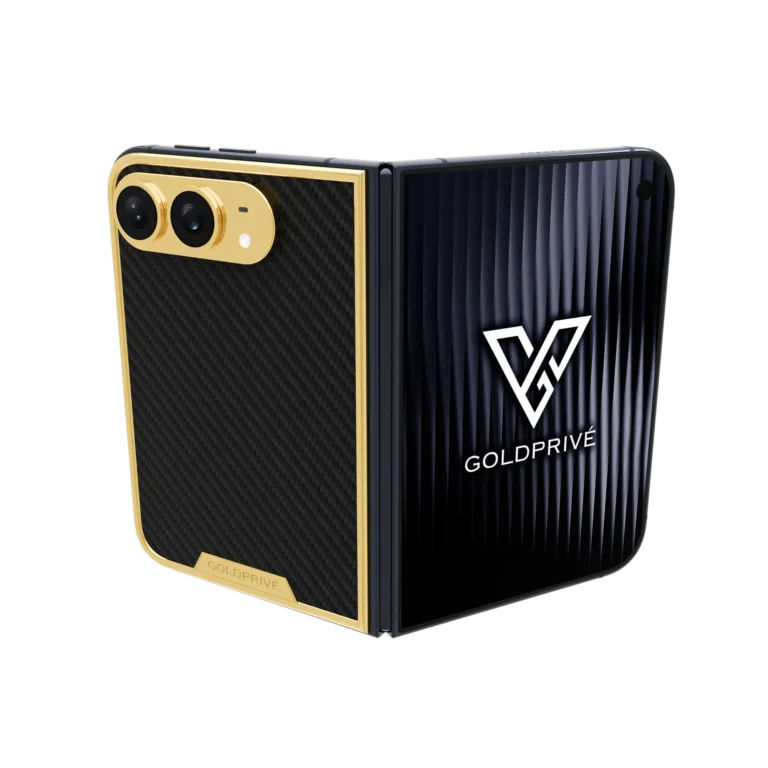
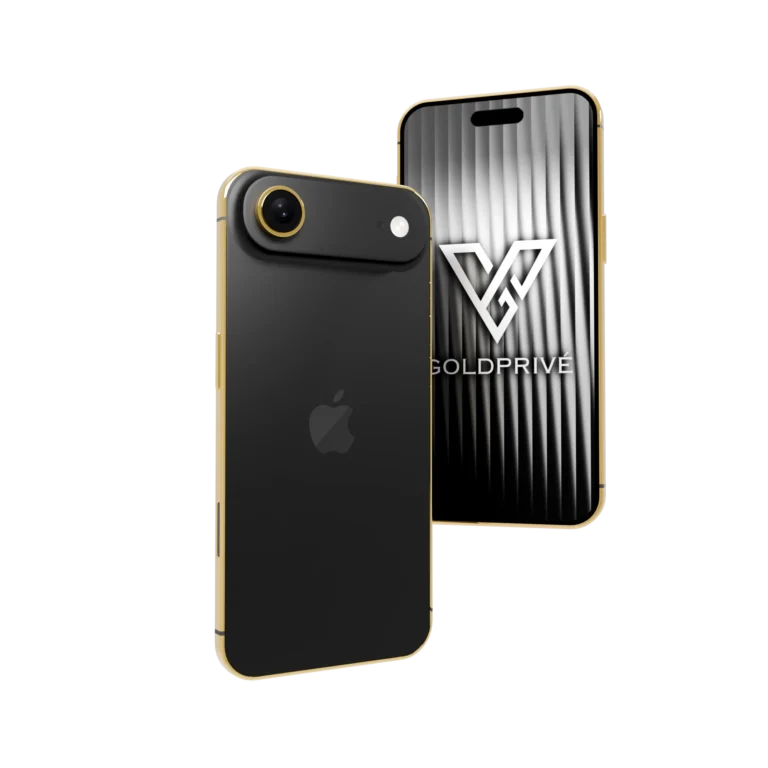
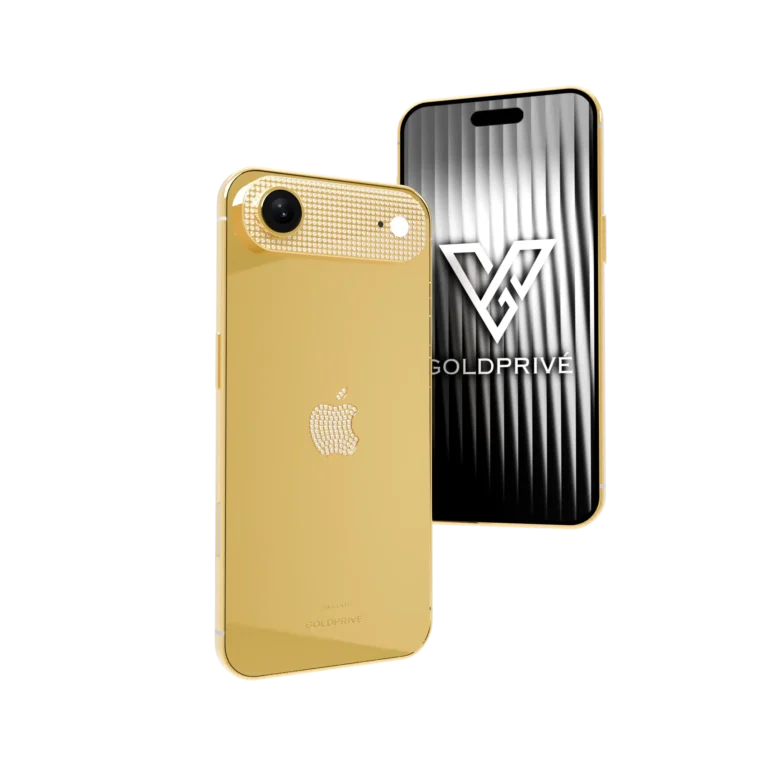
Apple’s foldable with a 24K gold, rose gold or platinum back plate, and on some designs a solid 18K gold charm or medallion. Pre-orders start now.
From $ 3,090
Galaxy S26 Ultra and Z Fold8 Ultra
Plated in 24K gold, rose gold or platinum at 5 to 7 microns. All three metals are priced the same within a design.
S26 Ultra from $ 3,010 · Z Fold8 Ultra from $ 5,880
Compare finishes and designs in the GoldPrivé gold phones collection.
FAQs
Is it worth extracting gold from old phones?
Not at home. USGS valued the gold in one phone at slightly more than 40 cents at 2002 to 2004 prices, and recovering it takes industrial refining. The value comes from volume, which is why certified e-waste recyclers are the right destination.
Do iPhones contain more gold than Android phones?
There is no published per-model figure that allows a fair comparison. Apple discloses where it uses gold and how much of it is recycled, not the weight per iPhone.
Does a gold-plated phone contain a lot of gold?
More than a standard phone, but plating is still thin. At 5 to 7 microns, each 100 cm² of 24K plating is roughly 1 to 1.4 g of gold. Designs with solid 18K charms or medallions carry far more: about 15 to 26 g of pure gold on the two iPhone Duo pieces above.
Is the gold inside a phone 24K?
Not necessarily. Apple describes connector gold as durable when alloyed with nickel or cobalt, so functional gold is often a hardened alloy rather than pure 24K.
Sources and further reading
- USGS Fact Sheet 2006-3097: Recycled Cell Phones, A Treasure Trove of Valuable Metals
- U.S. EPA: Electronics Donation and Recycling
- Apple Environmental Progress Report 2025
- World Gold Council: Gold Demand Trends Q2 2025
- UN Global E-waste Monitor 2024
- Royal Society of Chemistry: Gold, element information and uses